
Benjamin Guggenheim
1865 - 1912
Pueblo, Colorado and the North Atlantic
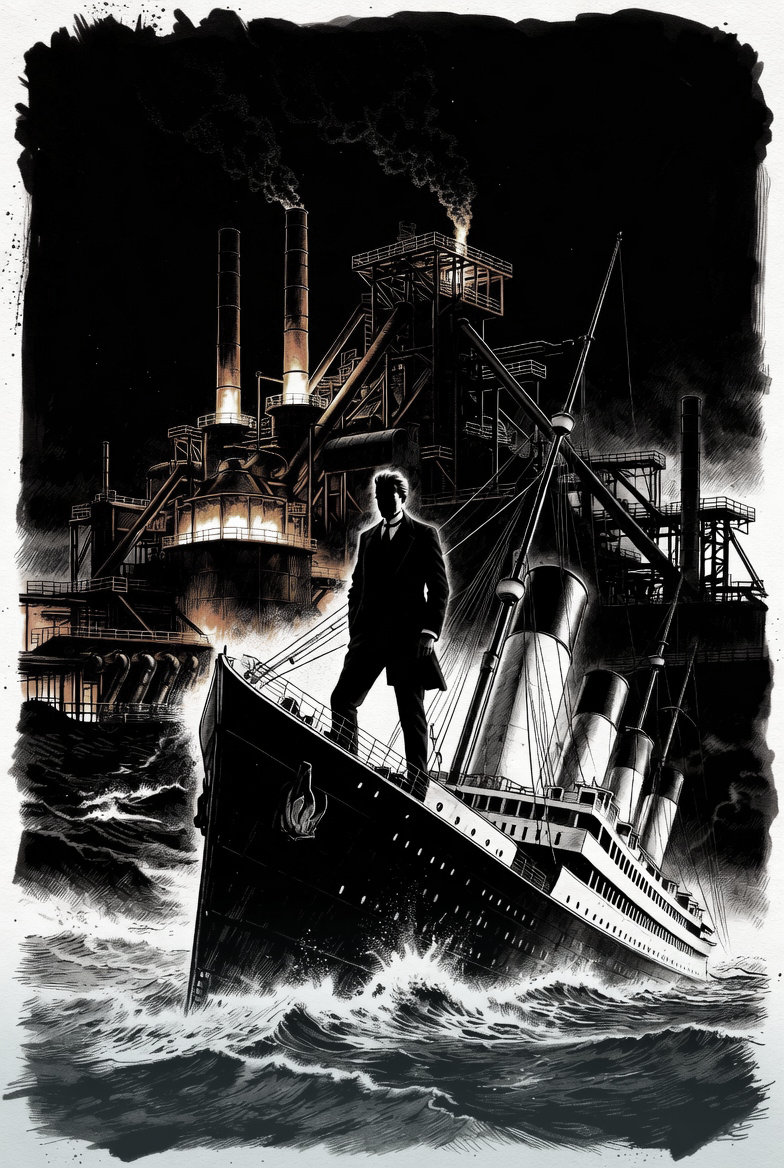
Benjamin Guggenheim - Brief Historical Profile
- Born: October 26, 1865
- Birthplace: Philadelphia, Pennsylvania
- Family: Son of Meyer Guggenheim; one of seven brothers in the powerful Guggenheim family
- Family Business: The Guggenheims built a vast fortune in mining and smelting (silver, copper, lead)
Early Career and Colorado
- Became involved in the family business in his early adulthood (late 1880s).
- Sent west to help expand operations during the Colorado mining boom.
- Lived in Pueblo, Colorado around 1888-1894, where the family operated major smelting facilities.
- Time in Pueblo exposed him to the industrial backbone of the fortune: ore, fire, labor, and risk.
- Though not known as a deeply hands-on industrialist, this period tied him directly to Colorado's role in building the Guggenheim wealth.
The Guggenheim presence in Colorado was substantial and consequential. Meyer Guggenheim's sons had acquired smelter interests in Pueblo and Denver during the 1880s, and the Philadelphia Smelting and Refining Company — effectively a family enterprise — was among the largest processors of Colorado silver and lead ore during the period. By 1895, the Guggenheims had consolidated their Colorado operations into the American Smelting and Refining Company (ASARCO), a trust that controlled a significant portion of the nation's silver processing capacity. The Pueblo smelter, where Benjamin worked for several years, was one of the key facilities in that network. The fortunes extracted from Colorado's mountain districts in the 1880s and 1890s paid for the Paris apartment where Benjamin Guggenheim was living when he booked passage on the Titanic.
Later Life and Europe
- After Colorado, he shifted back east and then spent extended time in Europe, particularly Paris, France.
- Lived a more cosmopolitan life: wealth, travel, and high society, rather than active industrial management.
- Maintained connections to the family business but was known more for lifestyle than operations.
Final Journey
- In April 1912, he boarded the RMS Titanic as a first-class passenger while returning from Europe to the United States.
- Evidence suggests he intended to continue traveling within the U.S., with Colorado still part of his broader personal and business orbit.
Death
- Died during the RMS Titanic sinking on April 15, 1912.
- His body was never recovered.
- Remembered for his reported composure and the now-famous statement about going down "like gentlemen."
- Forged in Colorado industry.
- Refined in European high society.
- Ended in the Atlantic.
Recovered Account
Click the image to open the sealed content.
Status: sealed
— In first class he dined in grace, Now with Davy Jones in the abyssal embrace. —
Archive Cross-Reference
- In 1898—fourteen years before Guggenheim boarded the Titanic—a maritime novelist named Morgan Robertson published a novella describing the sinking of a fictional ocean liner named the Titan. The correspondences between Robertson's fiction and the actual disaster are documented in a dedicated archive investigation.
- The Titan Record — Morgan Robertson and the Ship He Imagined — Investigations Desk, Case File No. 001.