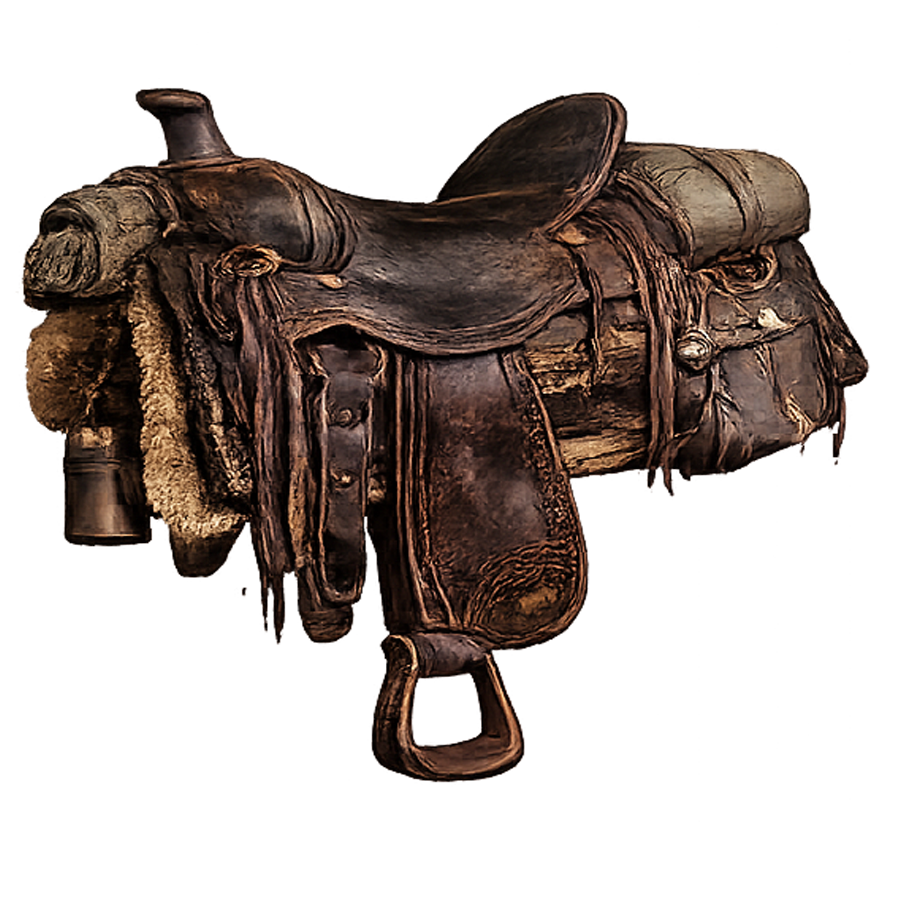
This saddle predates the Frazier shop entries by more than a decade. It enters the ledger as PS-06 on account of its origin, established near Las Animas in 1878, when the trade route through that corridor was still the primary commercial artery for the southern plains. The manufacture is consistent with regional work of that period — functional, unornamented, built for distance. Its age alone sets it apart from the other objects in this record. Everything else in the ledger came later. This one was already there.
Three deliberate arc cuts mark the cantle. The cuts are not damage and not wear; the archive characterizes them as intentional, their depth and spacing consistent with a made mark rather than an incidental one. Similar marks appear on other objects in the ledger, though those objects entered the record years afterward. The archive notes this without drawing a conclusion. Whether the mark is a common practice of the region, a shared convention among a particular set of craftsmen, or something with a narrower origin, the record does not establish. It records the mark, and it records that the mark was here first.
Five owners held this saddle across four decades. Each transfer is documented — in county records, in estate filings, in at least one case in a bill of sale that has survived in partial form. What the record also documents, in each instance, is an event preceding the transfer. The current record describes these events only as being of "unusual character" without elaborating on their nature. A death nearby. A disputed claim that was resolved or abandoned. An absence that was not explained to anyone who thought to ask. The events differ in type. They are consistent in timing, occurring before the saddle moved rather than after.
The archive does not attribute cause. It records sequence. The sequence, across five transfers over forty years, is that each time this saddle moved from one hand to another, something had already moved in the life of the person releasing it. Whether the saddle was the occasion of these events, the consequence of them, or simply present in their vicinity, the record cannot determine. The ledger does not speculate. It enters the object, it enters the pattern, and it notes that no fifth owner has come forward to close the account.