Harlan Moss appears in the county record as an ordinary working man. He is not remarkable in the archive except for what the archive preserves of his final instructions. He owned property, kept horses, and conducted his affairs without incident that the record has thought worth noting — until the matter of what was to be done with his saddles, which he addressed before his death with more specificity than the estate appears to have honored.
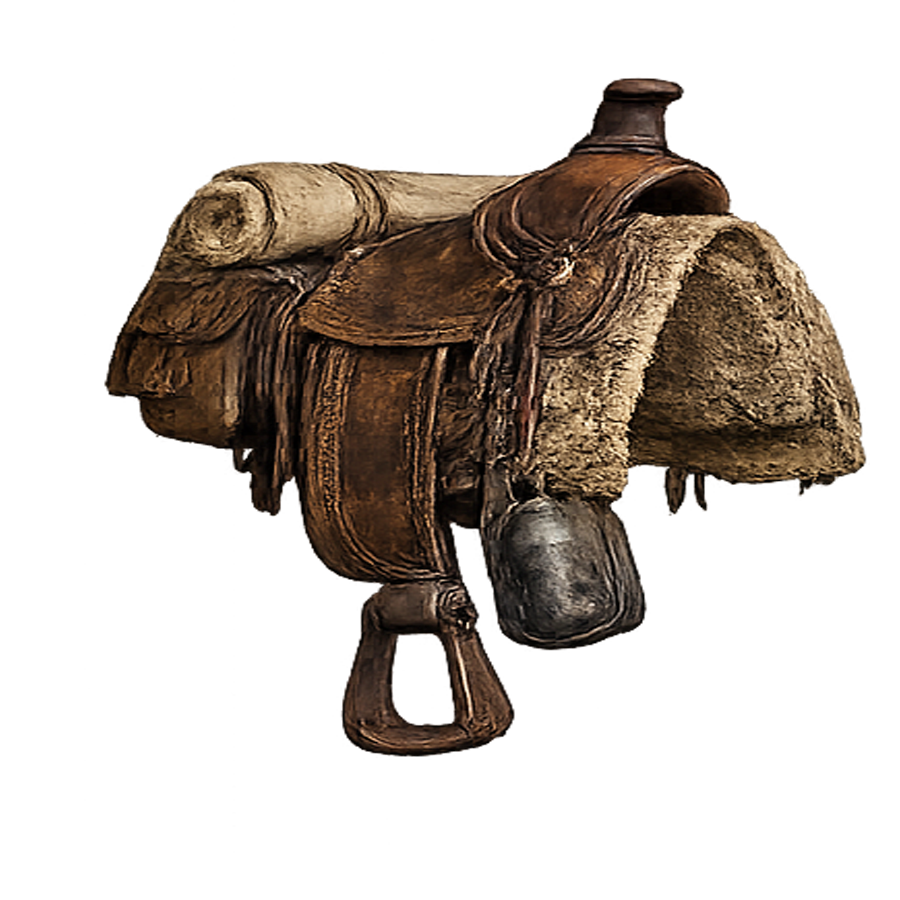
PS-07 is plain. No tooling. Pueblo manufacture, 1903. The estate notice that entered it into circulation describes it as being in sound condition and not used. Whatever Moss kept it for, it was not hard riding. He may have kept it for the reason he stated: he wanted it buried with him. An object set aside for that purpose would not show use. The saddle exists in the record exactly as the estate found it — intact, unworked, and available for sale despite his wishes to the contrary.
The classified notice filed by the estate executor disclosed, with some unusual candor, that the deceased had specifically requested the saddle not be sold. The executor determined that sale was necessary regardless. The listing instructed prospective buyers to inquire discreetly — a word that does not appear in ordinary estate notices, and whose presence here the ledger records without explanation. Moss had made his wish known. The estate made its determination. The saddle was listed.
Moss had owned two saddles. PS-01 — a Frazier work saddle from 1889 — he had sold before his death. It returned to his barn in 1911 without his involvement, one year before he died. PS-07, the saddle he had asked to keep, was sold by his estate without his consent. The ledger does not comment on this arrangement. It records that the saddle which came back was not the one he wanted back, and that the one he wanted to keep did not come back at all. Both saddles ended in different hands than Moss had intended. Only one of them objected.